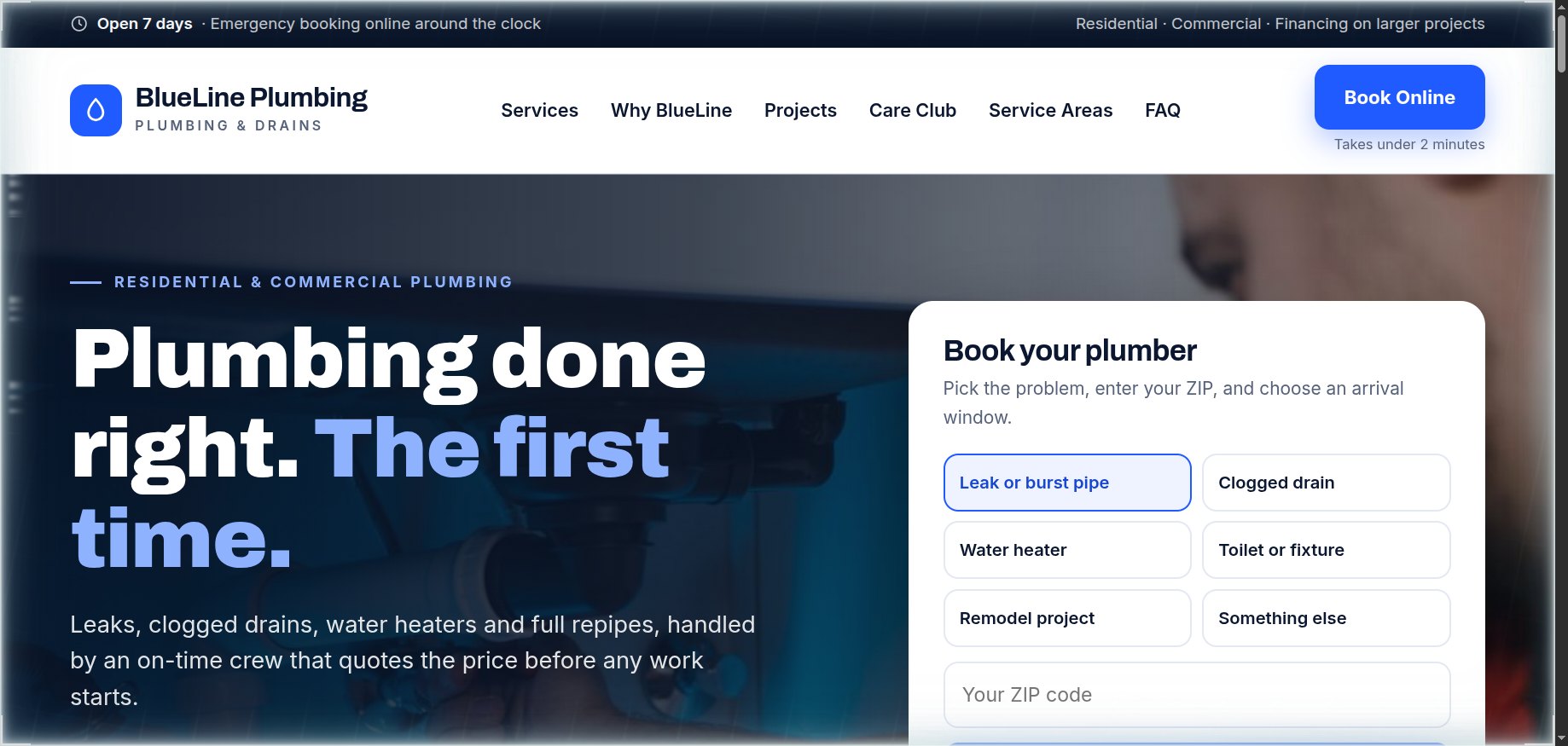
A plumbing site is simple on purpose: what you do, where you work, how to ask for a visit. We write the words. You supply the facts, because nobody knows your trucks and your territory better than you. Here is the short list, in the order we use it.
Your services, as customers say them
Open your last month of invoices and write down the jobs you actually did, in the words customers used. "Toilet running," "no hot water," "slab leak." Those phrases become the headings visitors recognize.
Then mark the ones you want more of and the ones you do not do. If you skip septic or new construction, say so; a clear no saves both sides a trip.
Facts to write down
- ✓Service area — the towns, ZIP codes or neighborhoods you actually drive to
- ✓Hours — regular office hours, and emergency hours only if you really answer then
- ✓Request details — what you want to know before a visit, such as address, problem and a photo
- ✓Business details — legal name, years in business and anything you want stated, as you want it worded
License, insurance and trust facts
If you want your state license number or insurance statement shown, send it exactly as it appears on your documents. We place it as plain text and do not write or verify it. If you are not sure it is current, check before sending.
Leave out claims you cannot support. "Fastest in town" invites a question you cannot answer; "same-day visits when we have open slots" is something you can keep.
Photos worth taking
- ✓Your truck with the company name — parked in daylight, straight on
- ✓You or your crew at work — a normal photo, not posed
- ✓A clean before and after — only with the customer’s permission
- ✓Your logo file — or tell us you need a simple mark made
A service note we can turn into a page
For your two or three most important jobs, give us a few more lines. A water heater note might read: "We replace tank and tankless units, gas and electric. Most swaps take half a day. We haul the old unit away. Customers usually ask if they need a permit and whether we can match their current size. We do not service boilers." That gives us the opening of the page, the questions to answer and the honest limit, all in your voice.
Do the same for drain work, leak repair or remodel plumbing if those matter to you. Short and specific beats long and general every time.
Questions customers ask you every week
- ✓Do you charge to come out — tell us your answer and whether it goes on the site
- ✓Can you come today — describe how you actually decide same-day visits
- ✓Do you work on older homes — galvanized pipe, cast iron drains, crawl spaces
- ✓Do you offer financing or payment plans — only if you truly do, and through which provider
How you want requests to reach you
Tell us who reads web requests and where. If your office manager handles scheduling, the form should go to the shared office inbox, not your personal one. Say which details save you a callback, such as whether the customer rents or owns, the age of the house or which fixture is acting up. We keep the form short and only ask for what you will use.
What to expect, honestly
- ✓We write from your facts — we do not invent services or credentials
- ✓We do not publish job photos without permission — tell us if the home belongs to a customer
- ✓Quote tools are separate — we place a request form, not an estimating system
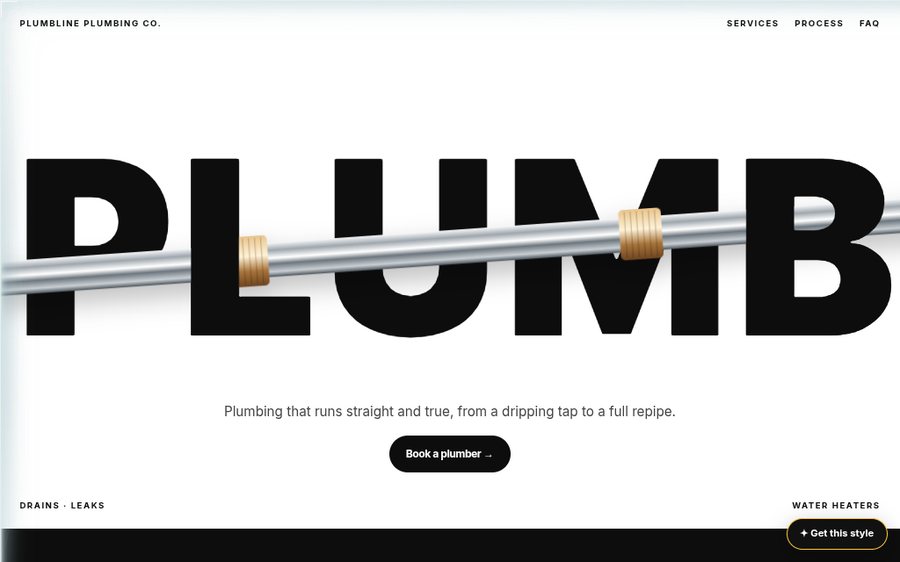
One example of what your site could look like
This is one sample we designed. Yours is built around your business, your photos and your words, and we have more examples if you want to compare directions.
How it works
1. Consultation
We learn your services, customers and goals, in English or Spanish.
2. We write and design
We draft the words and build the site around your business.
3. 10 revision rounds
You review and request changes until it is right.
4. Launch and care
We launch, then Website Care keeps it hosted, backed up, checked weekly and A/B tested.
Keep reading
What to send a web designer · Website in 48 hours · Plumber website mistakes · Questions plumbers should ask