Manufacturing websites fail quietly. Nobody complains; the quote requests simply do not come, or arrive without a drawing. Ask the following questions and you will quickly learn whether a designer understands how a buyer qualifies a supplier.
Questions about scope
Start with the fundamental question: "Is this a brochure site, a catalog or an ordering system?" The answer shapes cost and timeline. A brochure with capability pages and an RFQ form is a small project; a catalog with filters and specs is larger; an ERP or order system is a different kind of software and not what a standard site plan covers.
Ask for the page list: home, capabilities by process, materials, industries, quality, about, RFQ and contact. Ask which are included in the plan you are being quoted, and how many pages the plan allows. Business Plus, for example, covers up to 20 pages.
Questions about the RFQ path
- ✓What fields does the RFQ form have? — part name, quantity, material, date, company and file upload
- ✓How are files handled? — where they are stored and who can see them
- ✓Where do requests land? — your inbox or your quoting team’s, with a copy
- ✓Can it mention NDAs? — only as your company actually practices
- ✓What happens after submit? — a clear confirmation of what to expect
Questions about ownership and support
Ask who owns the domain and who holds hosting. Ask whether you can take your text, drawings and photos if you leave. Ask what happens with email tied to your domain during any move. These are the questions that matter when a vendor relationship ends, so ask them while it is friendly.
Ask what the monthly fee covers. Website Care at $30/month includes managed hosting, HTTPS, backups, uptime checks, weekly performance checks, A/B testing and up to 30 minutes of small edits per month.
Questions about content and claims
Who writes the capability pages? We write from your equipment list and process notes, and you correct anything technical. Ask whether the designer will refuse to add certifications or tolerances you cannot document. They should. Ask how many revision rounds there are: ours is 10, which matters when engineers review every number.
Questions about how a buyer qualifies you in two minutes
A purchasing agent with a new part to source often has a short list and little patience. Ask the designer to show you where, on a capability page, that buyer finds the work envelope, the materials you run and the quantities you prefer. If those facts sit three paragraphs down under a story about the founder, the buyer moves to the next tab.
Ask how industries will be presented. A page per industry only makes sense when the work genuinely differs, for example cleanliness requirements for food equipment parts or documentation for aerospace brackets. Otherwise, a single list of industries served is more honest and easier to keep current.
Questions to ask about files and drawings
- ✓Which file types will the form accept? — confirm the formats your engineers actually open, such as STEP, DXF and PDF
- ✓Is there a size limit? — large assemblies can exceed what a basic form allows
- ✓What if the upload fails? — the buyer should see an alternative route, not a dead end
- ✓Are uploads kept on the web server? — ask how long and who can reach them
- ✓Can the site show sample parts? — only parts you own or have permission to display
Questions about the people behind the site
Ask who you will deal with after launch, and how a change request works when your sales manager wants a new material added on a Tuesday. Ask whether the designer has ever written for technical buyers, and ask them to explain, in their own words, the difference between a prototype run and a production run. The answer tells you whether you will spend your revision rounds teaching basics.
What to expect, honestly
- ✓We are not an ERP vendor — no inventory or order management
- ✓Technical accuracy depends on your review — we write from your notes
- ✓Confidential files need your policy — we do not set NDA terms
One example of what your site could look like
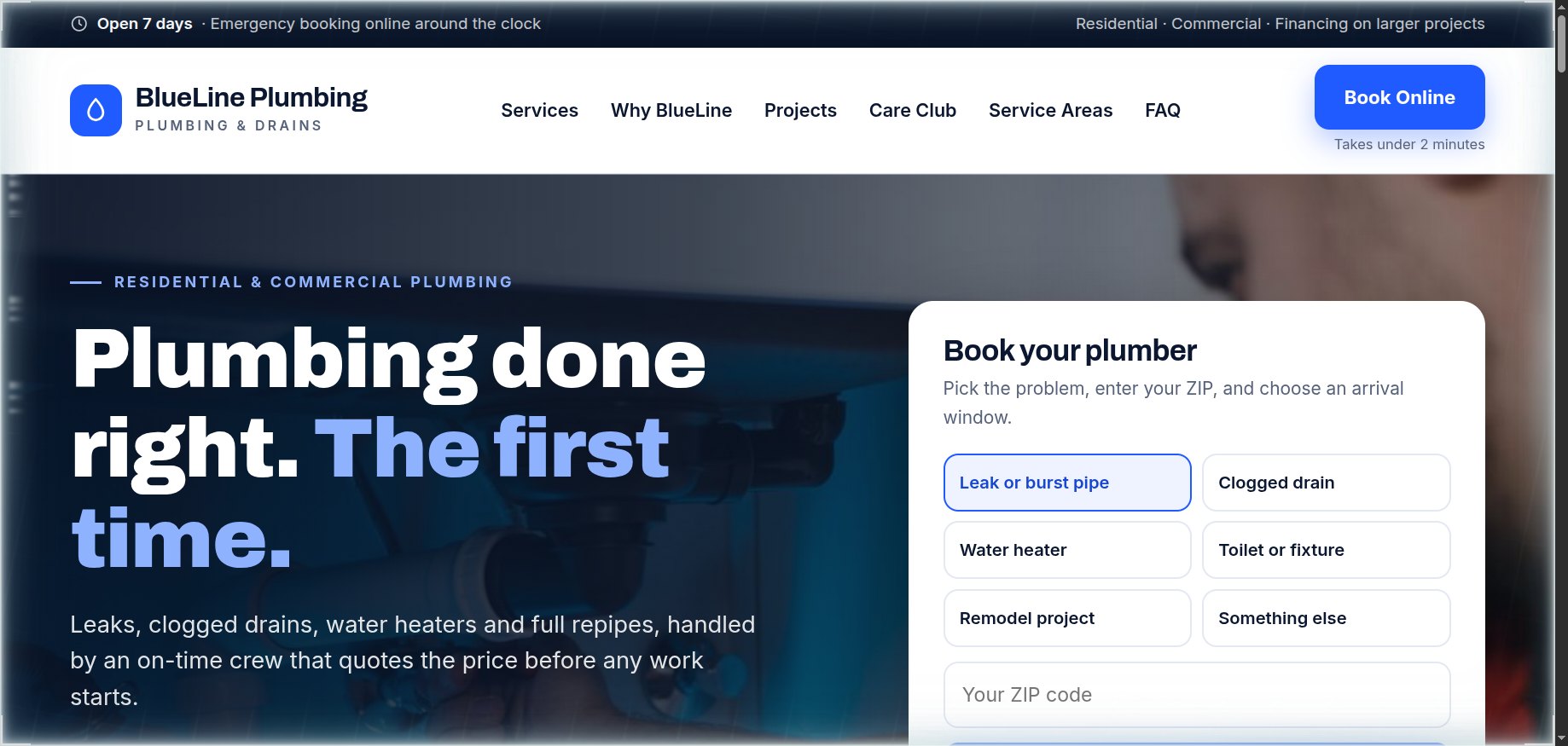
This is one sample we designed. Yours is built around your business, your photos and your words, and we have more examples if you want to compare directions.

How it works
1. Consultation
We learn your services, customers and goals, in English or Spanish.
2. We write and design
We draft the words and build the site around your business.
3. 10 revision rounds
You review and request changes until it is right.
4. Launch and care
We launch, then Website Care keeps it hosted, backed up, checked weekly and A/B tested.
Keep reading
Manufacturing RFQ websites · Who owns your website · Cheap websites: what to check · Website mistakes to avoid