A freight broker site launches well when the modes you handle, the regions you cover and the details a quote needs are written down in plain words. Shippers decide whether you move their freight before they spend time on a form, and carriers look for a clear way to join. Keeping those two paths apart is the structural decision that matters most.
How the launch unfolds
Day 1-2: You send modes, regions and quote fields, and we plan separate pages for shippers and carriers.
Week 1: We draft services and coverage, and you check every sentence against how you actually operate.
Week 2: We build the quote form and the carrier page, then test both on a phone and confirm each goes to the right inbox.
Launch: We recheck wording, publish and verify the forms; a 48-hour launch is possible for eligible projects with content ready.
What to gather before you start
- ✓Modes and equipment handled — Dry van, reefer, flatbed or LTL, each with one sentence about the freight it suits
- ✓Coverage regions and lanes — Where you move freight most often, stated honestly so unfit requests are filtered out early
- ✓Operating authority details — Wording drawn from your own records, in the way you hold it
- ✓Quote request fields — Origin, destination, weight, equipment, pickup date and any special handling, ranked by what you truly need
- ✓Carrier onboarding steps — Documents, insurance proof and who reviews them, so carriers know what to expect before applying
The first month after launch
In the first month, update coverage as new lanes open and prepare notes ahead of pre-holiday demand. Ask customers for feedback through the channels you already use. Review the quote form after you see which fields get skipped. Check that the carrier page still describes onboarding the way you actually run it, and trim any lane details that have changed since launch.
Mistakes to avoid at launch
- ✓Sending shippers and carriers to the same page — Each group hunts for the right path and many give up
- ✓Asking for too many fields in the quote form — Busy shippers abandon it and ask another broker
- ✓Describing coverage as nationwide with no detail — Visitors cannot tell whether their lane is realistic and wrong inquiries pile up
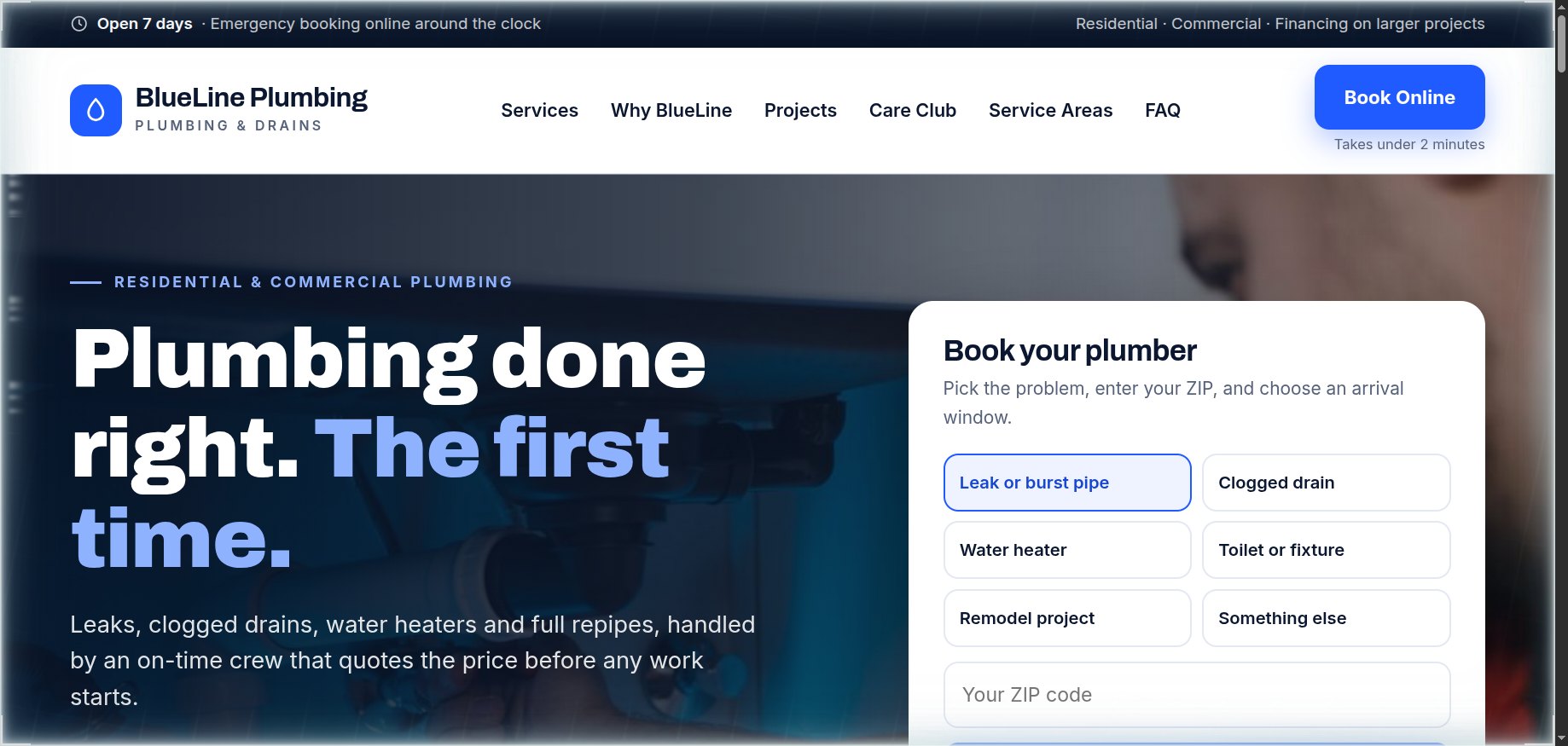
One example of what your site could look like
This is one sample we designed. Yours is built around your business, your photos and your words, and we have more examples if you want to compare directions.

What it costs
Websites are priced one-time by size, plus Website Care at $30/month for hosting, HTTPS, backups, weekly checks and A/B testing. Every package includes a consultation, mobile-friendly design, copy we write for you, a contact form, essential search setup and 10 revision rounds. Monthly SEO is an optional add-on when you are ready for it.
Optional add-ons, billed separately
The prices above are for your website. These two are separate monthly products you can add now or later. Neither is part of the website price.
Monthly SEO, from $50/month: new pages published on your site every month. See Monthly SEO →
Business Spotlight, from $30/month: articles about your business, labeled as paid, published on The Company Chronicle. See Business Spotlight →
How it works
1. Consultation
We learn your services, customers and goals, in English or Spanish.
2. We write and design
We draft the words and build the site around your business.
3. 10 revision rounds
You review and request changes until it is right.
4. Launch and care
We launch, then Website Care keeps it hosted, backed up, checked weekly and A/B tested.
Keep reading
Websites for freight brokers · What a freight broker website costs · What to send your designer · Plan your website